
Strength Training After 40: Complete Beginner Guide for Women Over 40 to Build Muscle and Prevent Muscle Loss
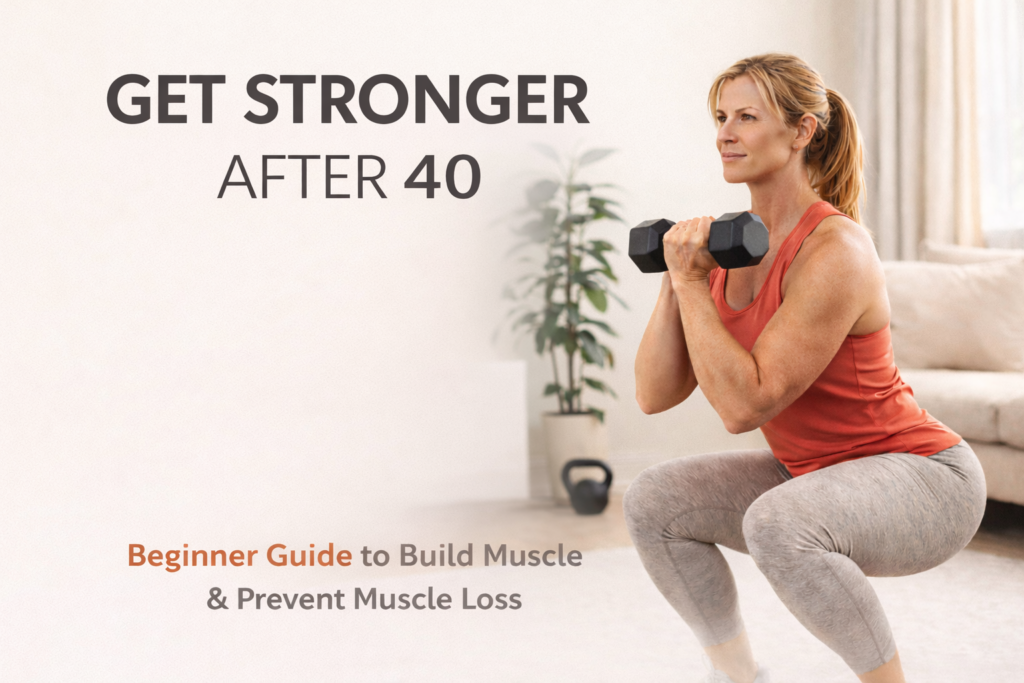
Starting strength training after 40 can feel intimidating, especially if you are new to exercise or returning to fitness after many years. Many women over 40 worry about injuries, muscle loss, or simply not knowing how to begin a safe and effective workout routine.
The good news is that it is never too late to start strength training. With the right approach, beginners can still build muscle, improve muscle mass, and protect long-term health and longevity. Training in your 40s can dramatically improve energy levels, support joint health, enhance bone density, and help you maintain independence well into later life.
This beginner’s guide to strength training explains why resistance training is essential after the age of 40, how to create a simple training plan, and which strength training exercises help women build strength safely while reducing the risk of injury.
Why Strength Training Is Important for Women Over 40
As we reach the age of 40, the body begins to naturally lose muscle through a process known as sarcopenia. This gradual decline in skeletal muscle can reduce energy levels, slow metabolism, and negatively affect body composition. Without regular exercise, adults may lose between 3 and 8 percent of muscle mass per decade, which leads to weaker muscles and joints, lower metabolism, and increased body fat.
Resistance training helps preserve muscle mass and improve overall health. Regular strength training for women supports:
- Improved muscle mass and strength
- Better bone density and reduced fracture risk
- Stronger joints and improved mobility
- Reduced risk of chronic diseases like diabetes and heart disease
- Improved posture, balance, and coordination
- Better body composition and fat loss
For women in their 40s, strength training becomes one of the best strategies to maintain physical strength and protect health and longevity for decades to come.
According to the Mayo Clinic, resistance training is one of the most effective ways to maintain muscle mass,
bone density, and overall health as you age.
Can Beginners Still Build Muscle After 40?
A common myth is that people cannot build muscle after 40, but research consistently proves this is not true. The body continues to respond to resistance exercise at any age, and adults over 40 who start training can still achieve impressive gains in muscle mass and strength.
When you perform strength training exercises, your muscles experience small amounts of controlled stress. This triggers muscle repair, during which muscle fibers rebuild stronger and thicker than before. With consistent strength training, beginners can expect to increase muscle mass, improve muscle tone, and enhance overall physical performance.
Even adults over 40 who are completely new to fitness can see improvements in maximal strength and endurance within just a few weeks of starting a structured training program. Consistent strength training helps preserve muscle mass that would otherwise be lost to aging.
How Menopause Affects Muscle Loss and Bone Density
Hormonal changes during menopause can accelerate muscle loss and significantly reduce muscle mass. Lower estrogen levels also affect bone density, increasing the risk of osteoporosis and fractures. Because of these changes, many women notice that it becomes harder to maintain muscle, manage weight, or sustain energy levels through their 40s and 50s.
Fortunately, strength training for women can directly counter these effects. Lifting weights stimulates muscle growth, strengthens muscles and bone, and supports metabolic health. Regular resistance training also improves body composition by helping the body maintain lean muscle while supporting fat loss.
For many women, beginning training after 40 becomes an important and empowering strategy for maintaining strength, confidence, and independence through menopause and beyond.
How Often Should You Train? Workouts Per Week for Beginners
Many beginners wonder how many workouts per week they need to train to see results. Most fitness experts recommend two to three strength training sessions per week for beginners. This frequency allows enough time for recovery while still providing enough stimulus for muscle building and muscle repair.
A simple weekly training plan could look like this:
- Monday: full-body workout targeting all major muscle groups
- Wednesday: strength training session focusing on compound movements
- Friday: strength training session with progressive resistance
Each session should include several exercises performed for 8 to 12 reps per set, with 2 to 3 sets per exercise. This rep range is ideal for building muscle while managing recovery. Consistency is more important than intensity, especially when starting a strength training routine for the first time.
Best Strength Training Exercises for Women Beginners
Choosing the right strength training exercises helps beginners improve strength safely and efficiently. Beginners should focus on compound movements that train multiple major muscle groups at once, as these exercises improve coordination and strengthen the body more effectively than isolated movements.
Squats
The squat is one of the best exercises to start with for strengthening the lower body. It targets the legs, glutes, and core while improving movement pattern efficiency. Beginners can start with bodyweight squats before progressing to goblet squats using a light dumbbell.
Dumbbell Rows
Using a dumbbell, this exercise strengthens the back muscles and improves posture. Dumbbell rows are especially valuable for women over 40 because they help counteract the forward hunching posture that develops from prolonged sitting.
Push-Ups
Push-ups strengthen the chest, shoulders, and arms while engaging the core and improving full-body stability. Beginners can start with wall or knee push-ups and progress to full push-ups as their strength improves.
Lunges
Lunges help develop single-leg strength, improve balance, and build muscle in the glutes and thighs. They are excellent exercises to start building lower body strength and improving everyday movement patterns.
Resistance Band Exercises
A resistance band is ideal for beginners because it provides adjustable resistance and supports controlled movements without placing excessive stress on the joints. Resistance training with bands is particularly useful for warming up, targeting smaller muscle groups, and building strength safely at home.
Why Full-Body Training Is Ideal for Women Starting Strength Training
A full-body workout trains several major muscle groups during the same training session. This approach is particularly helpful for beginners because it allows you to strengthen all muscles without spending hours in the gym.
A typical full-body training session may include squats, dumbbell presses, rows, lunges, and core exercises. Full-body training helps develop muscle strength and build muscle evenly throughout the body while making it easier to stay consistent with only two to three sessions per week.
As your fitness improves, you can transition to split training, where you focus on different muscle groups on different training days. But for anyone starting a strength training routine, full-body training three times a week is the most effective and sustainable approach.
How to Start Lifting Weights Safely and Reduce the Risk of Injury
Safety should always be a priority when you start lifting weights. Beginners should avoid lifting heavy weights immediately. Instead, focus on learning correct form and performing each movement through a full range of motion before increasing load.
A proper warm-up is essential before each workout. A good warm-up may include light cardio, mobility exercises, bodyweight squats, and dynamic stretching. This prepares the joints, increases blood flow to the muscles, and reduces the risk of injury.
Using lighter weights at first helps you improve technique and build a foundation of strength. Over time, you can gradually lift heavier and increase resistance as your strength improves. This principle of progressive overload is key to consistent muscle building without placing excessive stress on the joints and connective tissue.
Understanding Progressive Overload: How to Lift Heavier Over Time
Progressive overload means gradually increasing the challenge placed on your muscles over time. This can be done by adding more weight, performing more reps, or reducing rest time between sets. Without progressive overload, the body adapts to the same stimulus and muscle growth slows down.
For beginners especially over 40, it is important to progress slowly and systematically. A good rule is to increase weight by no more than 5 to 10 percent once you can comfortably complete all your reps with good form. This approach builds strength and muscle while keeping the risk of injury low.
What Equipment Do You Need to Start Training?
You do not need expensive equipment to begin strength training. Many effective workouts can be performed with simple tools. Dumbbells allow beginners to train each muscle group individually and improve coordination. Resistance bands are useful for improving flexibility and providing resistance without excessive joint stress. Bodyweight exercises like push-ups, squats, and lunges require no equipment at all.
These simple tools make it easy to perform full-body training both at home and in the gym, removing the barrier of needing a gym membership to start your strength training journey.
Nutrition and Recovery: Essential Support for Muscle Growth
Exercise alone is not enough to build lean muscle. Proper nutrition and recovery are essential for supporting muscle repair after training days. Protein intake plays a critical role in rebuilding muscle fibers after each workout. Women over 40 should aim for adequate daily protein from sources such as eggs, chicken, fish, Greek yogurt, and legumes.
Adequate sleep and hydration also contribute to better performance and help reduce muscle soreness. Rest days are not optional — they are when muscle repair and muscle growth actually occur. Allowing sufficient recovery between training sessions ensures that muscles adapt and become stronger over time.
How Long Does It Take to See Results From Strength Training?
Many beginners want to know how long it takes to see results. In most cases, improvements in strength and endurance appear within four to six weeks of consistent training. Visible changes in muscle tone, posture, and body composition may take slightly longer, often eight to twelve weeks.
With a consistent strength training program, many women experience significant improvements in fitness, confidence, and energy levels within a few months. Strength training also offers important mental and emotional benefits, helping people feel more capable, motivated, and confident in their daily lives.
Remember, the time to build real lasting strength requires patience. Start training with realistic expectations and focus on progress, not perfection.
Key Things to Remember About Strength Training After 40
- Strength training helps preserve muscle mass and bone density as you age
- Beginners can still build muscle after 40 with consistent resistance training
- Start with full-body workouts two to three times a week
- Focus on proper technique and full range of motion before increasing weight
- Gradually increase resistance using the principle of progressive overload
- Rest days are essential for muscle repair and growth
- Nutrition, especially protein intake, supports muscle building
- Strength training improves joint health, body composition, and mental wellbeing
- Consistency over intensity is the key to long-term results
Start Your Strength Training Journey Today
There has never been a better time to embrace strength training. Whether you are completely new to exercise or returning after a long break, the benefits of lifting weights for women over 40 are undeniable. From preserving muscle mass and bone density to improving body composition, joint health, and confidence, strength training offers a powerful and sustainable path to better health.
With patience, commitment, and the right training plan, anyone can build stronger muscles, improve mobility, and enjoy better overall health well into their 40s, 50s, and beyond. Your strength training journey starts with a single workout. Start today.
